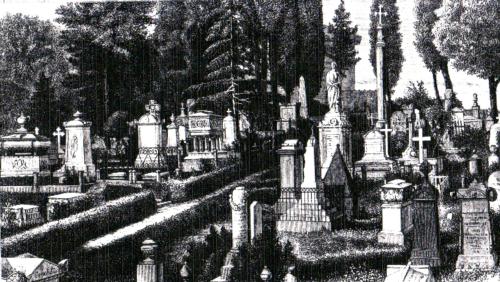
English Cemetery in Florence, Italy

New England Abolitionists Buried in Florence, Italy

In October  I gave a paper at a really interesting conference in Florence having to do with the English Cemetery. At least 80 Americans were also buried there in the 19th-century, including Theodore Parker. I spoke on Edmonia Lewis who began her life in Italy in Florence – – and said a bit as well about Sarah Parker Remond who was born in Salem and studied medicine in Florence (I should be clear that neither woman is buried there; they were part of the larger Florentine ex-pat community.)

The restoration of the English Cemetery is under the direction of the extraordinary scholar and activist, Julia Bolton Holloway. Photographs are from her websites.
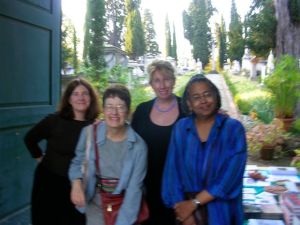
ConferenceWomen1Some of the participants

For some of the conference papers and much more info. Google: City and The Book V

eabrowningntomb

Elizabeth Barrett Browning’s tomb

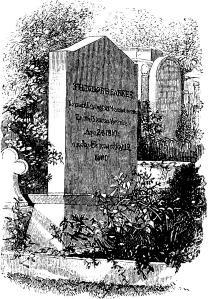
parker-graveTheodore Parker’s original grave. A more elaborate monument was installed later.

04_03_05title

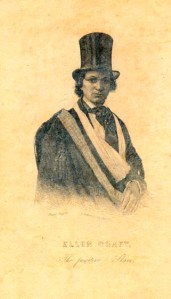
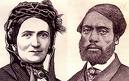
…in 1855, the case against Boston minister Theodore Parker came to trial. Charged with inciting an abolitionist riot, he defended himself by describing the horrors of slavery. He told the dramatic story of William and Ellen Craft, fugitive slaves from Georgia. The light-skinned Ellen had posed as a white man, and William pretended to be her slave, as they journeyed one thousand miles to freedom. In Boston, they received a warm welcome from the anti-slavery community. When their masters sent agents to reclaim them, abolitionists harassed the men until they gave up and left town. But Boston was no longer safe. The Crafts fled again, this time to England. They did not return to the U.S. until after the Civil War.

In April of 1855, Boston was abuzz with talk about a controversial court case. The Reverend Theodore Parker, whom friends and co-workers called “Minister to the Fugitive Slave,” was to stand trial for inciting a riot.

The previous spring, Parker had addressed an abolitionist crowd gathered at Faneuil Hall. He urged them to take action to prevent a fugitive slave from being returned to his master. A riot did, in fact, follow Parker’s speech, and he was charged with inciting it. Now, a year later, the case had come to trial.

Parker defended himself by attacking the immorality of slaveholders and all those who helped protect “the peculiar institution.” In the 200-page defense he wrote and later published, he equated morality with active, even if illegal, opposition to slavery.

He drew upon the story — well-known in Boston — of a young couple who had, like many fugitive slaves, been his parishioners. William and Ellen Craft had made a 1,000-mile escape from slavery only to find themselves in danger in Boston. When slave-catchers came to reclaim them, Parker and other abolitionists defied the law and risked arrest to protect the couple.

The Crafts’ story was compelling indeed. Both of them were born into slavery in Georgia. William’s first owner was a gambler, who sold off his slaves one by one to pay his debts. When his master decided that a slave with a marketable skill would bring a higher price, he apprenticed William to a carpenter.

Ellen was the daughter of a slave named Maria and Maria’s master, Colonel James Smith. Bitterly resentful of the fact that the light-skinned Ellen was often mistaken for a member of the family, Mrs. Smith gave the 11-year-old girl to one of her daughters as a wedding present.

Ellen and William met in Macon, Georgia, in the early 1840s and fell in love. William described their condition as “not by any means the worst”; still, they despaired at the thought of spending their lives in bondage. Knowing that as long as she was a slave, her children would be born into slavery, Ellen resolved never to marry and have children. “But after puzzling our brains for year,” William recalled, “we were reluctantly driven to the sad conclusion that it was almost impossible to escape.” They decided to get the consent of their owners and were married in 1846.

Almost three years passed before the couple devised an ingenious and audacious plan. Ellen was so light-skinned that she could pass for white. They agreed that she would disguise herself as a young white man traveling north attended by his slave. William used his savings to purchase the clothing and accessories that Ellen needed. She would cut her hair, don clothes befitting a gentleman, and wear dark glasses. At the last minute, they realized that Ellen would have to sign the guest register at their lodgings; it was illegal for slaves to learn to read or write, so they decided to bind her arm in bandages and say that they were going north to seek medical treatment. With an injured arm, she could ask others to sign for her without arousing suspicion.

On December 21, 1848, they slipped out of Macon. For four harrowing days, they traveled by train, boat, and stagecoach. Their ruse was nearly uncovered several times when fellow travelers or stationmasters questioned why a man would risk taking a slave to Philadelphia where he could so easily run away. William served his “master” with such devotion that Ellen could respond convincingly that she had little fear of that. Luck was on their side, and they arrived in Philadelphia on Christmas Day.

They remained in there for several weeks before continuing on to Boston, where abolitionists hailed them as the heroes they were. They spent the next few months on a speaking tour of Massachusetts and then began boarding in the Beacon Hill home of black activist Lewis Hayden. Ellen worked as a seamstress and William as a cabinetmaker. He became both a successful tradesman and a leader in Boston’s black community.

In September of 1850, however, a newly passed federal law, theFugitive Slave Act, put them in jeopardy. Northerners were now obliged to help slave owners reclaim their “property.” Within a month, two agents arrived in Boston looking for the Crafts. William barricaded himself in his shop while friends stood guard outside. The agents persisted, but William managed to get himself back to the Haydens’. Lewis Hayden armed his house with kegs of gunpowder and vowed to blow it up rather than surrender a single person under his protection. Ellen Craft went into hiding at Reverend Theodore Parker’s home. For the next two weeks, the minister wrote his sermons “with a sword in the open drawer under [his inkstand], and a pistol in the flap of the desk.”

Anti-slavery activists harassed and threatened the agents and followed them everywhere. In the course of five days, they had them arrested five different times on charges such as slander and attempted kidnapping. Finally, the agents were intimidated into leaving the city.

The abolitionists were jubilant, but they knew that the Crafts were no longer safe, even in Boston. When the Crafts’ former masters wrote to President Millard Fillmore for help, he replied that he would mobilize troops if necessary to see the law enforced. The Crafts decided that, like hundreds of other fugitive slaves, they would have to leave Boston. Since all the ports were being watched and guarded, they traveled overland to Nova Scotia, where they eventually boarded a boat to England.

The Crafts lived in England for the next 17 years. They educated themselves, raised five children, and worked on behalf of abolition. After the Civil War, the family returned to the United States, where William and Ellen founded a school for freed slaves in their native Georgia.

The Crafts’ story provided abolitionists like Theodore Parker with a dramatic example of why Bostonians should defy the Fugitive Slave Act. But southerners — and the federal government — were determined to enforce the law and return fugitive slaves to their owners. Like other radical abolitionists, Parker urged civil disobedience — to the point of violence if necessary — as a means of securing the freedom of slaves being sheltered in the North. When his case came before the court in April of 1855, all of Boston knew he would turn the trial into a debate on the morality of the Fugitive Slave Act. Reluctant to embroil himself in such an unpopular issue, the judge dismissed the case on a technicality, and Parker went free.

From the MassHumanities Mass Moments series.

<<<<<<<<<<<<<<<>>>>>>>>>>>>>>>
william-and-ellen-craftjpeg1

ellencraft-in-disguise

Ellen and William Craft (top) and Ellen Craft in disguise.


nadezhda7

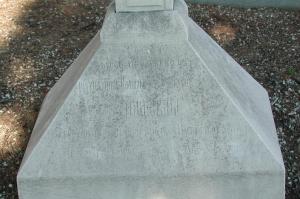
‘Zdes’ pokoitsja telo/ negritjanki Kalimy/ vo Sv. Kresenii/ Nadezdy/ privezennoj vo Florenciju iz Nubii/ v 1827 godu . . . 1851// Primi mja Gospodi/ vo Carstvie Tvoe’/Qui giacciono le spoglie mortali della nera Kalima, nel Santo/ Battesimo chiamata Nadezda (Speranza) che è stata portata a Firenze dalla Nubia nel 1827 . . 1851, Accoglila Signore nel Tuo Regno/

Inscription in cyrillic on the tomb of Nadezhda, a Nubian girl brought to Florence  at age 14 as a slave and baptized into the Russian Orthodox church.

dome2

A view of the Duomo from the English Cemetery
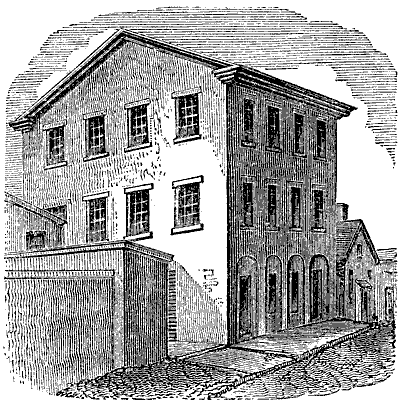

The African Meeting House on Beacon Hill in Boston

The original African Meeting House built in 1806

The Meeting House after it was remodeled in 1855

The African Meeting House on Smith Court off of Joy Street housed a Baptist church and a school. It is the oldest surviving black church building in the United States.

For a while, back when, I was the entire curatorial staff for the Museum of African American History on Beacon Hill in Boston during the period when the late Henry Hampton (Eyes On The Prize) was Chair of the Museum board. I was reponsible for the African Meeting House (1806) on Joy Street, the Abiel Smith School (1835) next door, and the rescue of the African Meeting House on Nantucket which has since been restored.

-I offered guided tours in English, French, and with interns, Spanish and German.

-Brought Brian Lanker photo exhibition, I DREAM A WORLD, and the New England premiere of film GLORY to Boston.

-Acquired signed first edition of book by Phillis Wheatley for the Museum among other additions to the collections.

-Presented readings by Toni Morrison, Alice Walker, Leon Forrest, etc.

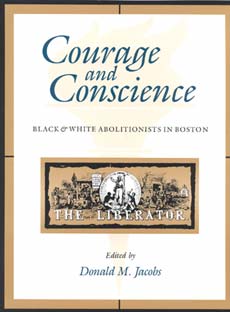
-Co-curated exhibitions on early New England African American history and culture with the Boston Athenaeum – – including the publication Courage & Conscience.

-Initiated and organized concerts and recording of music by William Grant Still and other major black classical composers performed at the African Meeting House.

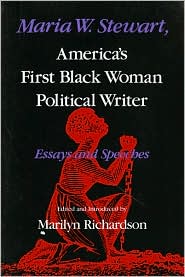
See the book MARIA W. STEWART: AMERICA’S FIRST BLACK WOMAN POLITICAL WRITER (available on Amazon) for the life and work of a woman who lectured in this building in the 1830s.

Stewart bok cover


“ . . . enthusiastic, well-written . . . read it if you want to be inspired by a truly heroic woman.” —New Directions for Women

“ . . . the fullest account to date of Stewart’s life and an excellent basis for understanding Stewart’s work.” —History

“This is informative and inspiring source material for today’s scholars, lay readers, and ‘professionals’ . . . ” —Journal of American History

In gathering and introducing Stewart’s works, Richardson provides an opportunity for readers to study the thoughts and words of this influential early black female activist, a forerunner to Frederick Douglass and Sojourner Truth and the first black American to lecture in defense of women’s rights, placing her in the context of the swirling abolitionist movement.

Citations (learn more)

66 books cite this book:

More Citations: 1 2 3 4 Next


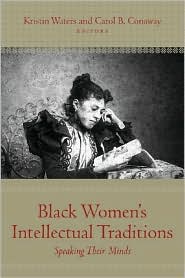
. . . and I have related essays in these books:


sisters of the spirit cover_lrg


blk-womens5

courageconscience84_med


<<<<<<<<<<<<<<<>>>>>>>>>>>>>>>

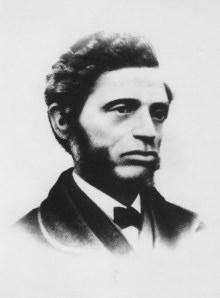
African-American historian William Cooper Nell lived and wrote in this house facing the African Meeting House in Smith Court. As a child he attended the school in the church basement. He later was a leader of the boycott and movement to integrate the Abiel Smith School next to the Meeting House.

^^^^^^^^^^^^^^^^^^^^^^^^^^^^^^^^^^^^^^^^^^^^^^


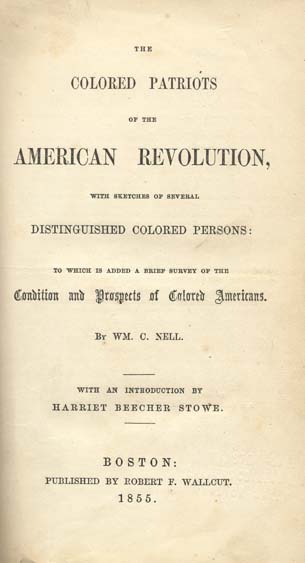
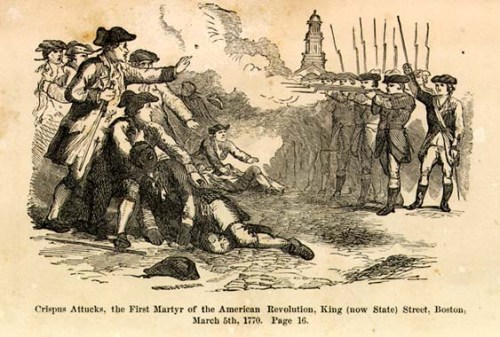
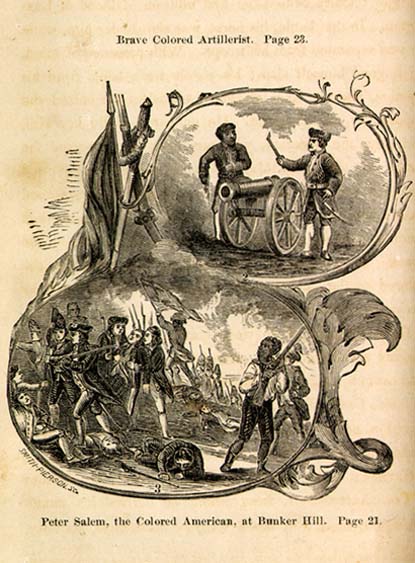
William Cooper Nell was the author of

THE COLORED PATRIOTS OF THE AMERICAN REVOLUTION


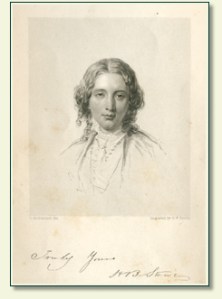
stowe2


Harriet Beecher Stowe, who wrote the intro to Nell’s book, was not only a brilliant and prolific writer, she was also a striking and charismatic woman

_______________________


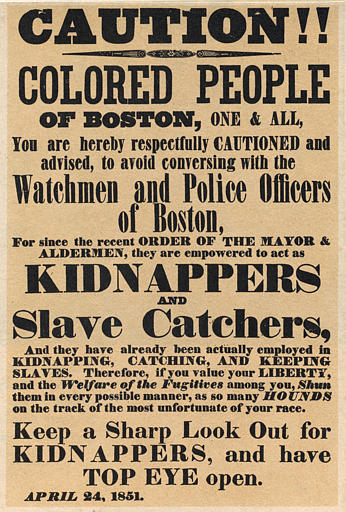
slave_kidnap_post_1851_boston1

An 1851 Boston, Massachusetts, poster warning both fugitive slaves and free blacks of kidnapping risk following the passage of the Fugitive Slave Act of 1850

MAKING MUSIC WITH A MAC ?

cliff-mastering4

Cliff Truesdell shows you how.

And be sure to see his new book:

INTRODUCING REASON 4

cliff-reason24_310
His WordPress blog is @ Cliff Truesdell Sonic Genius

And one of his CDs is

black-furiesm_aa240_

Available on Amazon, of course.

20081207fs21


cliff-photo6fdcaf7


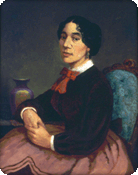
Is this a previously unknown portrait of Christiana Carteaux by E. M. Bannister?


bannistercrop3
              

christin

Portrait of Christiana Carteaux Bannister


edward-mitchell-bannister-p222

By her husband Edward Mitchell Bannister


______________________________________________________

Another picture by Dan Bering

(Edward Bannister Loved Sailing)


boatdeck44197_36442


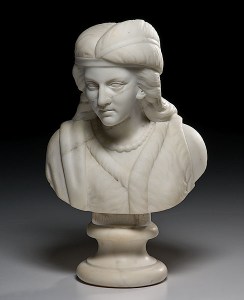
Auction of Edmonia Lewis’s MINNEHAHA

COWAN’S AUCTION: 2009, Winter Fine and Decorative Art, February 7

Sale Price Including Buyer’s Premium: $52,875.00

lewisejpg

Marble bust atop marble base, standing 11 5/8″ tall. With Minnehaha inscribed between figure and base, and Edmonia Lewis/ Fecit A Roma/ 1868 on reverse side. 

Born near Albany, New York, (Mary) Edmonia Lewis (ca. 1842 – after 1909) was the daughter of an Ojibway mother and a black, West Indian, father. Following studies at New York Central College in McGrawville, and at Oberlin College, she arrived in Boston, Massachusetts, in early 1863. There, under the patronage of abolitionists Lydia Maria Child, William Cooper Nell, and William Lloyd Garrison among others, she studied with the sculptor Edward Brackett.

Lewis rented space in the Studio Building in downtown Boston and quickly established herself as an artist on the rise, specializing in plaster and marble portrait busts and medallions. Her reputation was enhanced by the success of her bust of the fallen Brahmin Civil War hero, Robert Gould Shaw. With funds from the sale of copies of that work and of other pieces she sailed for Europe in the summer of 1865. Following a stay in Florence, Lewis settled in Rome where she lived for the rest of her professional life, making frequent trips to the United States to exhibit and sell her work and to garner new commissions.

Lewis’s Roman studio was listed along with those of other major artists of the day in all of the best guidebooks. Her career was followed closely by the American and European press, and she quickly became the first non-white American to gain an international reputation as a sculptor. Along with portrait busts of friends and public figures, her more ambitious early work referenced her dual heritage with themes of black emancipation and of Native American life and lore. In the latter instance she produced a body of work based upon Henry Wadsworth Longfellow’s epic poem, The Song of Hiawatha (1855), the single best-selling poem in the English language of the entire 19th-century. Savvy collectors and curious tourists alike flocked to Lewis’s studio to purchase this work with its added cachet of coming from the hand of an artist who was herself part Indian.

It was not uncommon for sculptors of successful larger works to excerpt a detail of such pieces in the form of a bust sold independently; most notably, Hiram Powers’ Greek Slave was offered in both versions. Given her friendship with Powers, Lewis would have recognized the wisdom of that practice. Her elaborate group, The Old Arrowmaker and His Daughter (also known as The Wooing of Hiawatha), and the standing couple in her Marriage of Hiawatha, provided the models for her busts of Minnehaha and Hiawatha with the subject’s name inscribed on the lower front atop the base. To date there are five known signed and dated copies of Lewis’s Minnehaha bust housed in public and private collections. This previously unknown example adds another to that number.

The mythic love story of Hiawatha and Minnehaha was well known. Still, in depicting the Indian maiden, Lewis walked a cautious line between creating a chaste child of the forest and perpetuating stereotypes of morally naïve savages. While Minnehaha wears an animal pelt, unlike the conventional depictions of such clothing at that period – – often draped over one shoulder with an exposed breast emphasizing a partially clothed life in the wild, hers is fashioned into a modest garment accented with graduated beads at her neck.

Lewis’s characteristic interest in the play of pattern and texture is evident in the pelt bodice framed on one side by the smooth flesh of a bare shoulder, and on the other by the weight and folds of the fabric of the blanket draped across the opposite shoulder. The beads suggest worked stone or bone; the headband is likely a strip of leather. They pose a contrast to the softness of the billowing flow of wavy hair and to the lightness of the elegant sweep and fall of the crowning feather. This is a small work with a considerable aesthetic and narrative burden. Within her persona, Lewis’sMinnehaha is designed to evoke the ambience of an untamed wilderness, the innocence of first love, and the nobility of a tragic figure caught in the inevitability of a sealed fate.

For most of the latter part of the 19th century these small marbles by Edmonia Lewis were highly prized; one example of her bust of Minnehaha was displayed at the National Academy of Design as early as 1868. Beginning in the 1990s they have begun to return to an increasingly avid market.

mr-feb09wr  We would like to thank Edmonia Lewis scholar Marilyn    Richardson for the catalogue essay. She is the Principal of  Art  + History Consultants, a  research and design group in  Watertown, MA. The technical description  and condition  report were provided by Cowan’s Auctions. 

Condition: The bust was once painted white, and this residue can still be seen in areas. It has mostly worn to again expose the marble as it would have been after execution. The paint was applied several decades ago. Two natural veins in the marble extend both across the face and the neck/chest, each visible on the reverse side. A small loss is apparent above the Fecit A Romainscription on verso.

(EST $20000-$30000)

and in the same sale: