Category Archives: 19th century

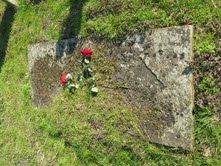
EDMONIA LEWIS DIED IN 1907


MYSTERY SOLVED!


“For there is good news yet to hear and fine things to be seen,
Before we go to Paradise by way of Kensal Green.”
— G.K. Chesterton, The Rolling English Road, 1914


9 January 2011

PRESS RELEASE

SCULPTOR’S DEATH UNEARTHED: EDMONIA LEWIS DIED

IN LONDON IN 1907


E-Mail: Marilynrichardson1@gmail.com

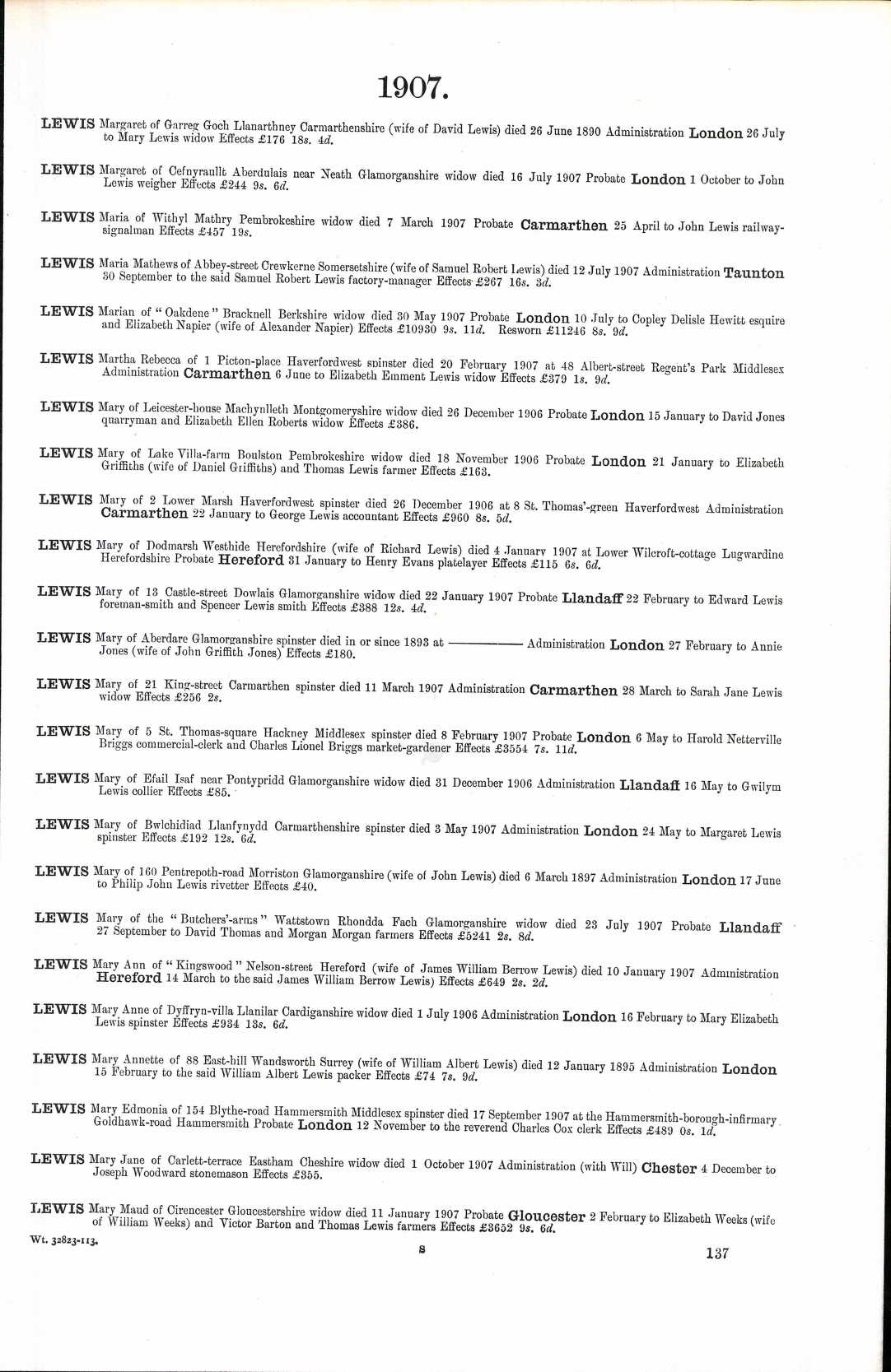
Cultural historian Marilyn Richardson has solved one of the persistent mysteries of American art history: where and when did the sculptor Edmonia Lewis die? The answer is, London, England, on 17 September 1907. According to British records, Lewis, whose full name was Mary Edmonia Lewis, had been living in the Hammersmith area of London and died in the Hammersmith Borough Infirmary. She left a modest financial estate.

Beginning with publications from the late 19th-century, the date of her death has been given as anywhere between 1895 and 1911 with no supporting primary evidence. Although she was a prolific and successful artist, Edmonia Lewis maintained an aura of mystery throughout her career with varying stories about her origins as the daughter of a woman of Ojibway descent and a black father from the West Indies. Lewis began her career in Boston, Massachusetts, and moved to Rome, Italy, in 1866. From there she made frequent trips back to the United States to exhibit and sell her work.

Richardson has published widely on Lewis and has written catalogue essays on her work for Sotheby’s and other auction houses. Recent sales of her sculpture from the 1860s have fetched record prices of $250,000 and above.

Now that Edmonia Lewis’s death is documented, Richardson says, the search is still on for official birth records to confirm Lewis’s claim that she was born in upstate New York. Proof of her birthplace and date have so far eluded determined scholars and researchers.

———————————————

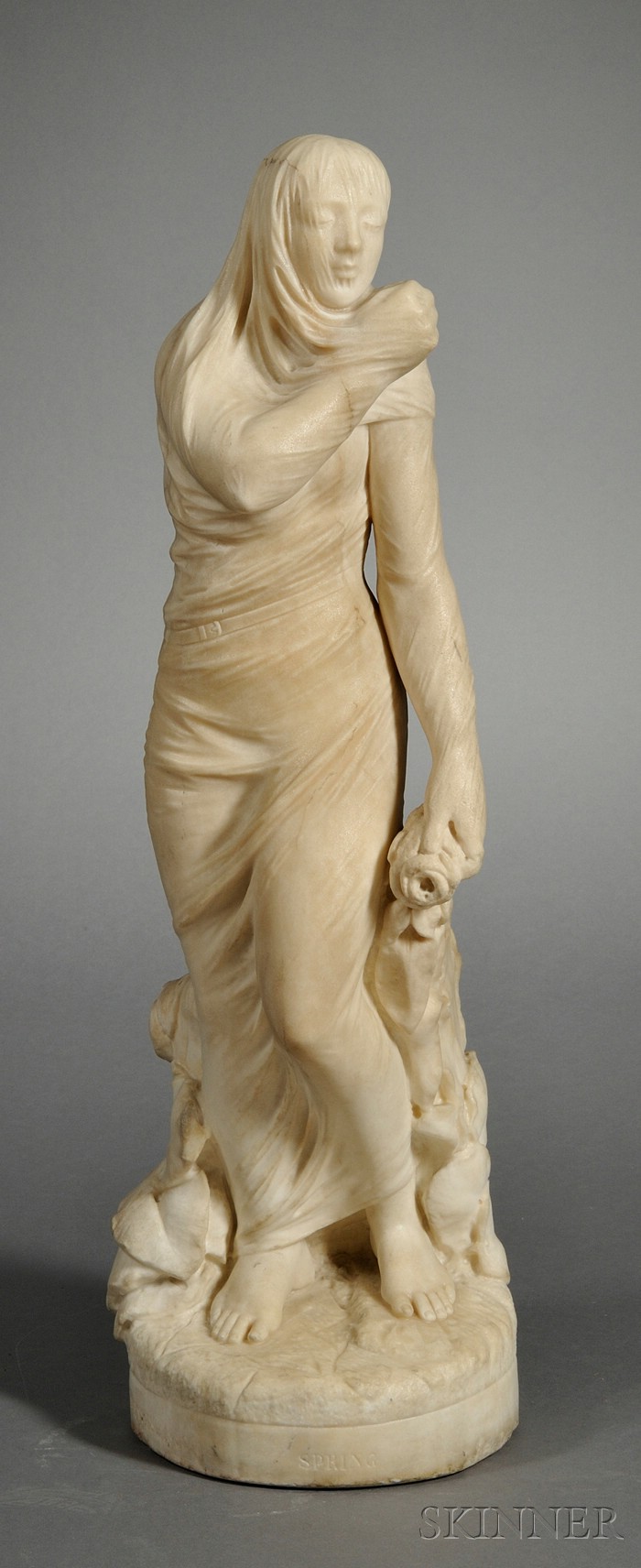
Lewis SPRING


Edmonia Lewis SPRING sold at Skinner, Boston, July 2010

Stewart in Translation

MARIA W. STEWART – A PRIMEIRA MULHER PRETA JORNALI

New Edmonia Lewis Record Set

Edmonia Lewis’s 1874 sculpture, The Marriage of Hiawatha, went for $314,500 at Sotheby’s May 21 American Paintings, Drawings and Sculpture auction. Lot 32.      marriage of Hia 5.09

CATALOGUE NOTE

Marilyn Richardson writes: “When Edmonia Lewis left the United States for Europe in 1865, she settled first in Florence and then within the year went on to Rome where she established her life and career as America’s first prominent non-white sculptor. The daughter of a mother of Ojibway Indian descent, her father was a black man from the Caribbean. In Rome she was recognized as a member of the community of expatriate American and British women in the arts that Henry James dubbed the “white, marmorean flock” for the number of sculptors among them. Beginning with her portrait bust of the fallen Brahmin Civil War hero, Robert Gould Shaw, completed in Boston in 1864, Lewis and her work remained in the public eye for most of the latter part of the 19th-century.

Works by Edmonia Lewis showing full-length figures are fewer in number than her portrait busts of contemporary, historical, and literary figures, copies of which were commissioned and sold in greater numbers. This newly recovered example of her group, Hiawatha’s Marriage, (also titled The Marriage of Hiawatha) – – three others from earlier dates are held in private and public collections – – is an instance of her later refinement of the composition.

One of her series of scenes from Henry Wadsworth Longfellow’s poem The Song Of Hiawatha (1855), this sculpture interprets passages presenting Hiawatha as the ” . . . hunter, / From another tribe and country, / Young and tall and very handsome . . .” who had won the heart of the maiden Minnehaha the previous year, but whom she feared might never return. In one of the loveliest sections of his epic poem Longfellow writes of their love in terms approaching an indigenous American prelapsarian Song of Songs.

Lewis’s composition borrows from the classical in a manner her patrons and audience would have readily recognized. Most directly, she echoes groups of Cupid and Psyche, although the couple’s embrace here lacks the traditional erotic charge, replacing passion with a respectful, protective reserve. The beads at Minnehaha’s neck represent their betrothal when “round [her] neck he hung the wampum /As a pledge, the snow-white wampum,” and then, in the scene Lewis depicts, “From the wigwam he departed, / Leading with him Laughing Water; / Hand in hand they went together …” Subsequent verses make it clear that Longfellow considered this journey, with their nights together in the forest, their woodland wedding, referring thereafter to Minnehaha as Hiawatha’s wife.

Lewis, characteristically, has clothed these Native American figures in a combination of animal pelt and elegantly draped fabric, positing both their wilderness origins and their innate finer sensibilities; all with the hint of a Roman toga for Hiawatha and a classically draped garment cascading to Minnehaha’s feet. The crown-like array of feathers atop his forthright brow and guileless face implies Hiawatha’s nobility of character. His elaborate necklace is his most exotic attribute. The rippling waves of Minnehaha’s hair conjure the laughing water of her name. The nicely detailed leather quiver and the array of arrows attached to Hiawatha’s belt speak more of Cupid than of a warrior prince from among the tribes of American Indians fighting for land and survival even as Lewis was at work in her studio on her Indian pieces of the 1860s and ’70s.

Within the composition the lovers lost in each other’s gaze step forward into their new life together but also, as all readers of the most famous American poem of 19th century well knew, they move toward their ultimate doom. Edmonia Lewis placed the work of the sculptor’s hand at the service of the poet’s romance creating the type of compelling narrative in marble embraced by a significant faction of the art-buying public of the day. Replicas of Hiawatha’s Marriage were available for purchase at Lewis’s Roman studio and on trips she took to the United States to exhibit and sell her work. Copies were also displayed at the National Academy of Design in New York City, in 1868, and at the Philadelphia Centennial Exposition in 1876.”

We are grateful to Marilyn Richardson for her assistance in cataloguing this lot.

Save Edward Bannister’s Providence Home

This is a very disturbing article from the Providence Journal. Although Brown University is first quoted as committed to preserving the historic building which was the home of the major 19th-century African American painter Edward Mitchell Bannister, a later paragraph indicates their desire to pass off the building to an organization that clearly cannot afford to purchase or restore it.

Black contributions kept alive

Sunday, March 1, 2009

By NEIL DOWNING

Journal Staff Writer

bannisterillus

Cows in Meadow by celebrated African-American artist Edward Bannister.

PROVIDENCE — One of the nation’s most celebrated African-American artists, Edward M. Bannister, gained prominencewhile living and working in Providence.

He won a national award for his work, at the Philadelphia Centennial Exposition of 1876. He helped establish an organization that became the Providence Art Club. A gallery at Rhode Island College is named in his honor.

But the house in which he lived, at 93 Benevolent St. in the city’s College Hill section, is a decrepit, boarded-up brick building, owned by Brown University — and used by Brown to store refrigerators.

That is one of the points that emerged during a tour yesterday sponsored by the Rhode Island Historical Society, held in commemoration of Black History Month, and intended to celebrate the history of African Americans who lived on College Hill from 1701 to the present.

The tour was conducted by Ray Rickman, an African-American author, historian and former state representative. “The history of the African-American community is totally interwoven with College Hill, and that fact isn’t well-known,” Rickman said in an interview.

Along the two-hour tour, Rickman pointed out the former residences of prominent Providence people — including John Brown — who once made fortunes through the slave trade, amassing wealth and influence. “Let’s not lie to ourselves about our legacy,” Rickman said.

Rickman relayed the College Hill connections of such well-known African-American figures as Sissieretta Jones, an internationally acclaimed opera singer, and William J. Brown, whose autobiography recounts his days as a slave.

At one point in the tour, the bus paused outside a beaten-down structure with a board across its front door, a rusted gate outside, and an orange peel abandoned on its stone steps.

It was here, Rickman said, that Bannister, the renowned artist, lived with his wife, Christiana. But the building is one of several residences in the area that Brown University has boarded up and uses solely for storage — the Bannister house for refrigerators, Rickman said.

The Providence Preservation Society has included the building on its “most endangered properties” list.

Rickman acknowledged the many contributions that Brown University has made to the city and the state. But he said he wished that it would take steps to better care for the structure and formally recognize its historical significance.

Rickman said he has been assured by Brown University President Ruth J. Simmons — the first African-American to head an Ivy League university — that the building will be preserved. But he said that Brown should “treat it with respect” in the meantime. The Bannister house “should be a tourist attraction,” he said.

(University spokeswoman Marisa Quinn said yesterday: “Brown recognizes that it is an important historical building, and that’s why we’ve offered it” to the Rhode Island Black Heritage Society. If the society can raise the necessary funds to move the building, “It’s theirs,” she said.)

About 45 people took part in yesterday’s tour, said Barbara Barnes, tourism services manager for the Rhode Island Historical Society. They included Mildred Nichols of Providence, who came “because I have an enormous interest in African-American history, black history, and I know Ray Rickman is a scholar,” she said.

Bernard P. Fishman, the Rhode Island Historical Society’s executive director, said that interest in the tour was sparked by a number of factors, including the election of the nation’s first African-American president, a rekindled interest in Abraham Lincoln, Black History Month, and Rickman’s reputation as an authority on Rhode Island’s ties to the slave trade and knowledge about the state’s black community.

ndowning@projo.com
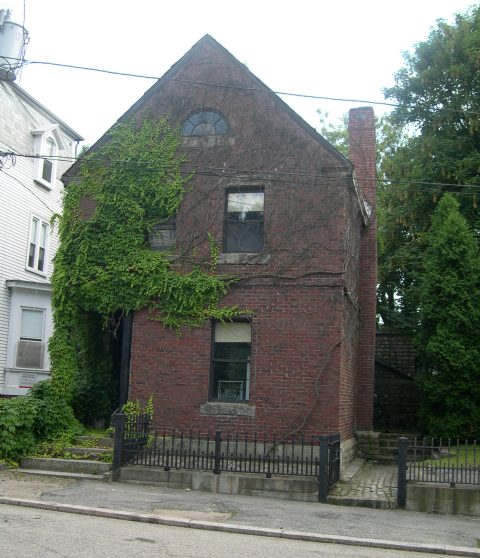
beckner-banister-reeves-house

Edward Mitchell Bannister and Christiana Carteaux Bannister lived in this Providence, RI, house from 1884 until 1898.

……………………………..

Here Is The Statement I Made At A June 24, 2009 Meeting

On Behalf Of Saving Bannister’s House

Edward Mitchell Bannister Lived at 93 Benevolent Street

You sit here now. The house where your family lived when you were born has been torn down. The house you grew up in has been torn down; the first place you lived after college has been torn down; the place you lived in when you first married has been torn down. We shall all live to be at least 100 years old, but ten years after we die, the home we last inhabited will be torn down.

You are many things – character and personality and the sum of all you beheld, the influence of all who nurtured you. But can you really tell me that there is not a dimension of who you are that is defined by a sense of place? Every one of us can recite the addresses of homes in which we have lived – – maybe even the phone numbers.

Those tricks of memory are connected to the human regard for a sense of place. In the arts, Rembrandt’s very name, van Rijn, locates him in a place, as was the custom of that day. We go to the homes and studios, to stand in the place, to be within the walls, to see what Vermeer or Picasso saw, to see where Monet worked. We go to Giverny to see the gardens he created and painted, to see the kitchen table where he took his coffee. In this country we go to Chesterwood, to Cornish, New Hampshire, to Olana, for many reasons, among them because those are places where, in the arts, greatness dwelt. And we enjoy there a sense of connection to and indeed a deeper understanding of the lives and inspiration and work of the artists who inhabited those spaces.

Why does Edward Bannister deserve less? Why do we as a nation, or Providence as a city, deprive ourselves of the opportunity to claim this man’s greatness in a way that is not abstract and ephemeral? Edward Mitchell Bannister was a great man, an important man, a man of extraordinary talent, ability and achievement. And beyond that he was married to Christiana Carteaux, a woman of uncommon talent, accomplishment and purpose in her own right. They spent 14 years  — fourteen of their most productive years, living at 93 Benevolent Street. He kept a studio elsewhere, but Edward Bannister lived, and thought, and sketched, and entertained, and daydreamed, and argued, and planned, and slept with his wife, or not  – – they had a complex relationship, and straightened the pictures on the walls, and chatted with neighbors, in that house.

Across the street from Bannister’s home, and a block away at 110 Benevolent Street, Senator Nelson Aldrich lived. The desk is there in that building at which he drafted the Federal Reserve Act. That affects all of our lives today. And a big sign hangs outside that house proclaiming it the Rhode Island Historical Society at the Aldrich House.

At 93 Benevolent Street Edward Bannister rose up in the morning, walked though the rooms of his home, sat in the evenings and thought long and hard about Sabin Point, Narragansett Bay, and The Mill in Knightsville and Leucothea Rescuing Ulysses, and about A Man on Horseback And A Woman on Foot Driving Cattle.  He thought about Oxen Hauling Rails, and Fort Dumpling at Jamestown, and a Street Scene in downtown Boston. And he made notes and drew sketches and thought about color and pigment and brushstroke and history and human interaction; about the beauty of the beasts of burden, the power and mystery of their presence in our world, and he thought about the people and the faces he set out to paint, about what they showed of lives lived and about how those lives can be enshrined on canvas.

African American art history is a kaleidoscope. Brilliant light, colors, visions swirling around, and there is an abundance of greatness there. We ooh and ahh, we celebrate, but we are not yet at the point of sustained close analysis of much of the work, its history, the very brushstrokes, the lives, the influences and conversations of most black American artists. We do not yet have the deep research, the catalogues raisonnee; the published presentations of bodies of work that establish stature beyond dispute; all the things that place an artist securely in the national and international canon, matters of race and gender aside. We are not there in part because as a nation we have yet to grasp the significance of the fullness of those lives, their histories, their careers including the meaning and cultural value of where they lived, where they worked.

One man on Benevolent Street wrote on paper and did many other things, fine and otherwise, always human, often political, that left him financially well off and garnered respect.  Another man, a block away, drew on paper, painted on paper and on canvas, built a career that left him financially comfortable and made it possible for him to live his life as an artist. And he left a legacy to this nation as well. One that we understand less well than that of the politician Nelson Aldrich because the papers have not been gathered, the essays and books have yet to be written. Edward Bannister’s house has not been honored as a site where greatness dwelt and where inspiration remains in the shadows and the cobwebs and the crumbling walls and ceilings and floors.

These are bad times financially. And so the challenge is even greater. The challenge is to ask ourselves why, of those two houses, one should stand and the other should deteriorate? And depending upon your answer to that question, what are you going to do about it?

At Christie’s New York


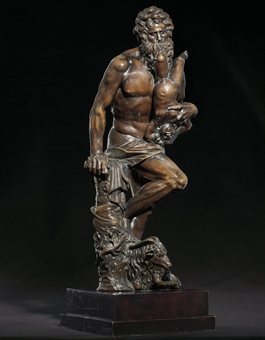
truesdell-saturn

The Truesdell SATURN which is an allegory of the season of Winter


. . . and a gorgeous Veerendael still life (which was withdrawn so this is a similar one.)

veerendael1

Highest Price for Edmonia Lewis Sculpture

Sold at Sotheby’s New York, 22 May 2008
EDMONIA LEWIS
(CIRCA 1843- 1907)

THE OLD ARROW MAKER


Estimate: 70,000—100,000 USD
Lot Sold.  Hammer Price with Buyer’s Premium:  301,000 USD 

Marilyn Richardson’s letter confirming the sculpture’s authenticity will accompany the lot.

CATALOGUE NOTE

Marilyn Richardson writes: “Along with income from sales and commissions, Edmonia Lewis supported herself through the sale of marble busts and groups illustrating scenes from Henry Wadsworth Longfellow’s phenomenal bestseller, the epic poem The Song of Hiawatha (1855). While inumberable painters and sculptors drew inspiration from that poem, Lewis’s figures were particular favorites among collectors, created as they were by the hand of a woman known to be part Ojibway.

“Copies of The Old Arrow Maker (sometimes called The Old Arrow Maker and His Daughter) identical in design and composition, were also titled The Wooing of Hiawatha. Both titles come from Longfellow’s Chapter X, “Hiawatha’s Wooing,” which includes the passages:

At the doorway of his wigwam
Sat the ancient Arrow-Maker…
Making arrowheads of jasper …
At his side, in all her beauty,
Sat the lovely Minnehaha …
Plaiting mats of flags and rushes; …

And further along:

At the feet of Laughing Water
Hiawatha laid his burden,
Threw the red deer from his shoulders;…

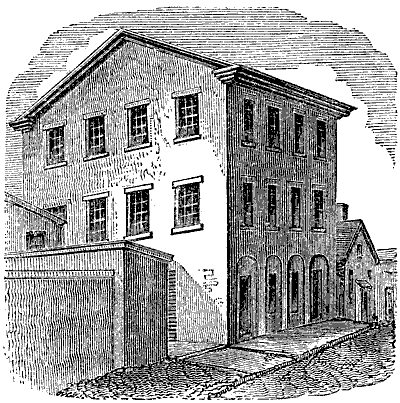
The African Meeting House on Beacon Hill in Boston

The original African Meeting House built in 1806

The Meeting House after it was remodeled in 1855

The African Meeting House on Smith Court off of Joy Street housed a Baptist church and a school. It is the oldest surviving black church building in the United States.

For a while, back when, I was the entire curatorial staff for the Museum of African American History on Beacon Hill in Boston during the period when the late Henry Hampton (Eyes On The Prize) was Chair of the Museum board. I was reponsible for the African Meeting House (1806) on Joy Street, the Abiel Smith School (1835) next door, and the rescue of the African Meeting House on Nantucket which has since been restored.

-I offered guided tours in English, French, and with interns, Spanish and German.

-Brought Brian Lanker photo exhibition, I DREAM A WORLD, and the New England premiere of film GLORY to Boston.

-Acquired signed first edition of book by Phillis Wheatley for the Museum among other additions to the collections.

-Presented readings by Toni Morrison, Alice Walker, Leon Forrest, etc.

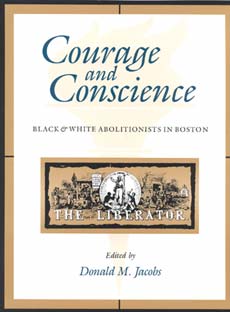
-Co-curated exhibitions on early New England African American history and culture with the Boston Athenaeum – – including the publication Courage & Conscience.

-Initiated and organized concerts and recording of music by William Grant Still and other major black classical composers performed at the African Meeting House.

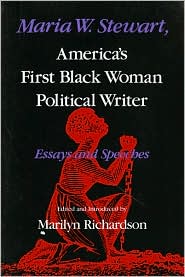
See the book MARIA W. STEWART: AMERICA’S FIRST BLACK WOMAN POLITICAL WRITER (available on Amazon) for the life and work of a woman who lectured in this building in the 1830s.

Stewart bok cover


“ . . . enthusiastic, well-written . . . read it if you want to be inspired by a truly heroic woman.” —New Directions for Women

“ . . . the fullest account to date of Stewart’s life and an excellent basis for understanding Stewart’s work.” —History

“This is informative and inspiring source material for today’s scholars, lay readers, and ‘professionals’ . . . ” —Journal of American History

In gathering and introducing Stewart’s works, Richardson provides an opportunity for readers to study the thoughts and words of this influential early black female activist, a forerunner to Frederick Douglass and Sojourner Truth and the first black American to lecture in defense of women’s rights, placing her in the context of the swirling abolitionist movement.

Citations (learn more)

66 books cite this book:

More Citations: 1 2 3 4 Next


. . . and I have related essays in these books:


sisters of the spirit cover_lrg


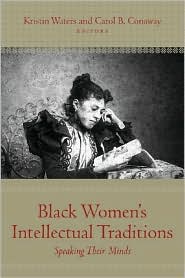
blk-womens5

courageconscience84_med


<<<<<<<<<<<<<<<>>>>>>>>>>>>>>>

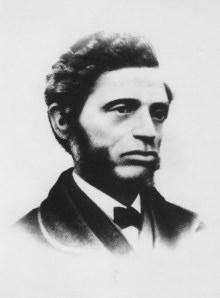
African-American historian William Cooper Nell lived and wrote in this house facing the African Meeting House in Smith Court. As a child he attended the school in the church basement. He later was a leader of the boycott and movement to integrate the Abiel Smith School next to the Meeting House.

^^^^^^^^^^^^^^^^^^^^^^^^^^^^^^^^^^^^^^^^^^^^^^


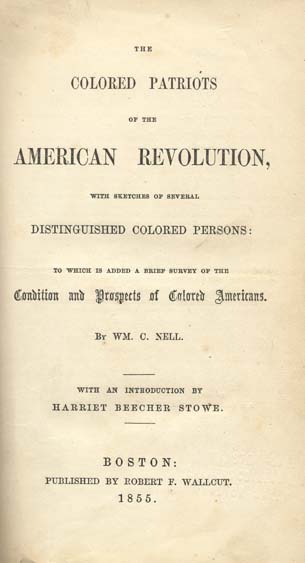
William Cooper Nell was the author of

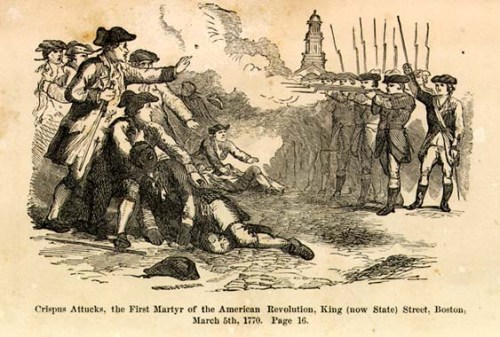
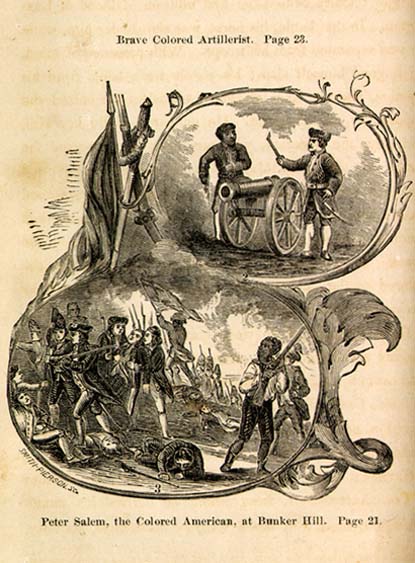
THE COLORED PATRIOTS OF THE AMERICAN REVOLUTION


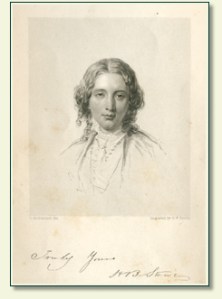
stowe2


Harriet Beecher Stowe, who wrote the intro to Nell’s book, was not only a brilliant and prolific writer, she was also a striking and charismatic woman

_______________________


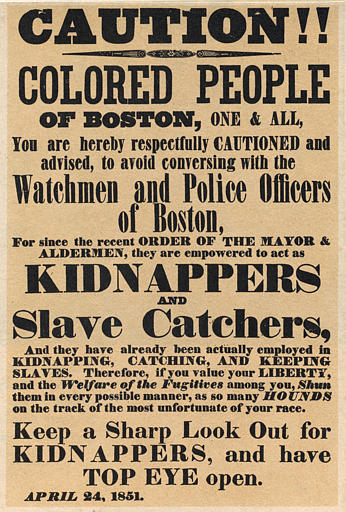
slave_kidnap_post_1851_boston1

An 1851 Boston, Massachusetts, poster warning both fugitive slaves and free blacks of kidnapping risk following the passage of the Fugitive Slave Act of 1850