Clarence Thomas “Exposed”?

This makes my day!

Ex-Girlfriend Of Justice Thomas Signs Deal For “Sexually Driven Memoir” | BuzzFlash.org

Source: http://blog.buzzflash.com/node/12175

My Response:

‎        “The moral arc of the universe is long but it bends toward justice”

Lying s.o.b. clawed his vicious way to the Supreme Court pandering to the right wing by promoting some of the most vile stereotypes and innuendo about black women. I’d say there are dots to be connected to total lack of respect for both Obamas that is expressed and tolerated in some quarters.

Yes, Hill has sensibly moved on and built a solid career and reputation. But if a church-going, Yale Law School graduate, civil rights attorney testifying under oath could be famously written about with impunity (for the writer) and little rebuttal as “a little bit nutty and a little bit slutty,” how many more straws does it take to break the back of the average, working class black woman?

Answer: There is not enough straw in the universe to do that, but some do stumble, and many of us, from all walks of life, felt her ordeal resonate in our bones.

Clarence T’s sex life is certainly not anything I want to know more about. However, if there is anything in that or other realms that will shame, embarrass, discomfort or discredit him, bring it on!

And not just because of Hill. As I’ve said, any black man who would use the term “high-tech lynching” to further his political ambitions is beneath contempt. And of course, look at his record on the court.

Thinking of Peter Gomes

. . . Build thee more stately mansions, O my soul,
As the swift seasons roll!
Leave thy low-vaulted past!
Let each new temple, nobler than the last,
Shut thee from heaven with a dome more vast,
Till thou at length art free,
Leaving thine outgrown shell by life’s unresting sea!

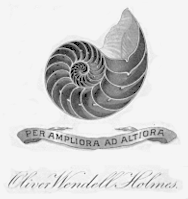
Last verse of The Chambered Nautilus, the poem Rev. Gomes read at the opening of the new American wing of Boston’s Museum of Fine Arts in November. He has suffered a stroke and is now in rehab. My uncle, Harry V. Richardson, was a mentor of Peter’s when he was a young chaplain at Tuskeegee and later.

New Edmonia Lewis Discovery

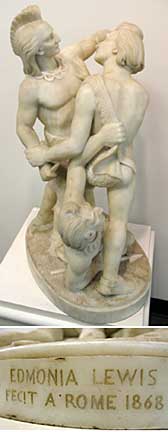
Three Indians in Battle by Edmonia Lewis

By Marilyn Richardson

Gabriel’s Auctioneers in Norwood, Massachusetts, was surprised that almost as soon as illustrated ads for its November 29, 2010, auction appeared on line and in print, the phone started ringing. An unusual number of callers had questions about a particular lot. Among the ad illustrations was a series of pictures of a dramatic piece of sculpture from an Ashland, Massachusetts, estate. The owner had little information about it, other than the possibility that his father had purchased it from an unknown source sometime in the 1950’s.

The 30″ high marble group shows three American Indian men engaged in combat. One figure grabs another by the hair with one hand and wields a knife with his other. A third man has fallen and struggles to pull himself up or to pull one of the other warriors to the ground. A long arrow and a battle-ax lie on the ground. The dynamic and complex composition leads a viewer to circle slowly to sort out the tangle of limbs and loincloths. The sculpture, in need of cleaning and polishing, is signed and dated “Edmonia Lewis/ Fecit A Rome 1868.” It is not given a title.

Lewis, born around 1842 (her birth and death dates are unknown) in upstate New York, was the daughter of a woman of part African-American, part Ojibway descent and a free Black man from the West Indies. Following study at New York Central College in McGrawville and a tumultuous stretch as a student at Oberlin College, Lewis moved in the early 1860’s to Boston where she studied with Edward Brackett and set up shop in the Studio Building on Tremont Street. Her marble bust of the martyred Colonel Robert Gould Shaw established her early reputation and earned her the money and patronage to sail to Europe.

After some months spent traveling in England and on the Continent, Lewis arrived in Rome in 1866. She settled there, working at first in a studio once occupied by the great Neoclassicist Antonio Canova (1757-1822). Throughout the years she made numerous trips back to the United States to exhibit and sell her work and to arrange commissions.

A friend of Anne Whitney, Harriet Hosmer, and Charlotte Cushman, Lewis was a member of a group of expatriate British and American women artists in Italy, dubbed by Henry James “the white, marmorean flock.” About Lewis he wrote: “one of the sisterhood…was a negress, whose colour, picturesquely contrasting with that of her plastic material, was the pleading agent of her fame.”

James’s comment notwithstanding, Lewis’s work was much in demand. Her studio, listed with those of other artists in the best guidebooks, was a fashionable stop for Americans on the Grand Tour, many of whom ordered busts of literary or historical figures to adorn their mantels or front parlors. Her figures based on Henry Wadsworth Longfellow’s 1855 epic poem The Song of Hiawatha were particular favorites, coming as they did from the hand of a woman known to be part Native American.

A number of Lewis’s depictions from Longfellow, including groups and single busts of Hiawatha and Minnehaha, have appeared at auction in recent decades, many of them fetching substantial prices. Those works emphasize the romance of the doomed couple, showing their courtship and their marriage. None among those works is of the warlike nature of this group—hence the unexpected flood of inquiries.

Although the theme is atypical of Lewis’s American Indian groups, there is an interesting contemporary reference to what could be this sculpture. In his self-published 1882 memoir, Glimpses of Europe in 1851 and 1867-8, Pennsylvania businessman Alfred Huidekoper describes an early 1868 visit to Lewis’s studio where he observed “…several renderings of Indian subjects, ‘Hiawatha’s Wooing and Wedding,’ ‘Indians Wrestling,’ etc.” While the stripped-down figures and the muscular grappling certainly borrow from Greek and Roman wrestling scenes, the addition of the third figure and the weaponry take this encounter from competition to combat.

Competition for the sculpture itself was definitely spirited, and the room erupted into applause when a phone bidder prevailed with a bid of $287,500 (including buyer’s premium). The underbidder was Michael Grogan of Grogan & Company in Dedham, Massachusetts.

Originally published in the January 2011 issue of Maine Antique Digest. (c) 2010 Maine Antique Digest


A Bit of Paris Nostalgia

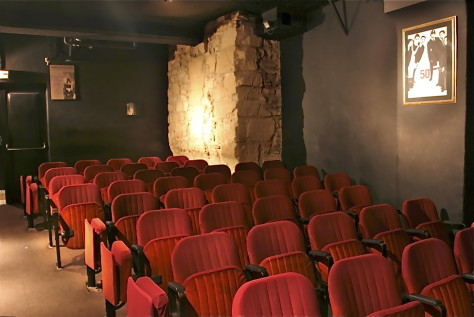
Theatre De La Huchette

Ionesco’s absurdist classic La Cantatrice Chauve (The Bald Soprano) has been playing here since 1957, running on a double bill with his La Leçon.

Things happening in 1961 — Mozart, Liszt, Chopin and much more.

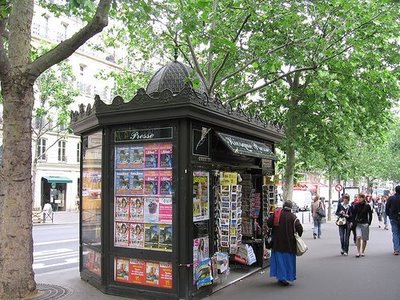
These independent news kiosks are disappearing, replaced by Hachette news stands.

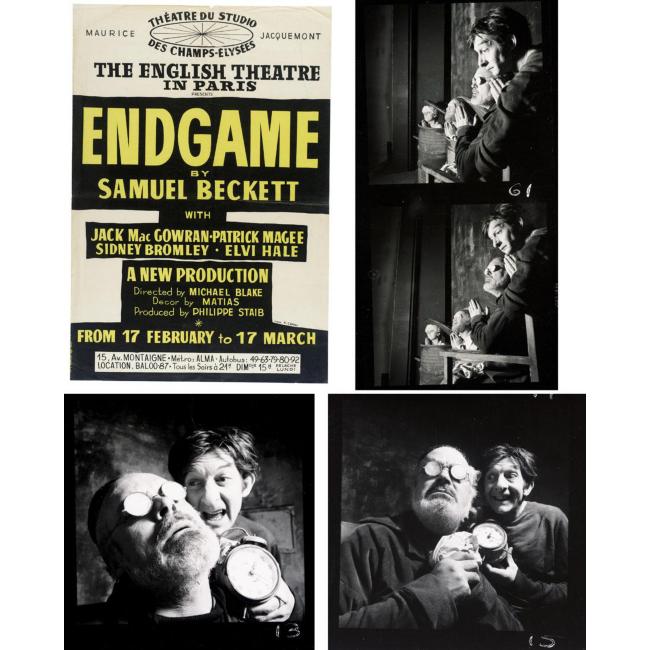
The poster and some images from the production of Endgame directed by friend Michael Blake.

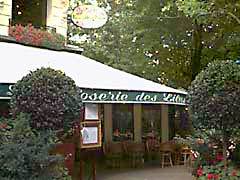
Closerie des Lilas where Michael introduced me to Samuel Beckett when they were rehearsing Endgame. Have the seafood.

Came upon this online in 2017. Hmmmm, I’ll have to try and dig up those letters from Michael.

http://www.sothebys.com/content/sothebys/en/auctions/ecatalogue/2006/english-literature-history-fine-bindings-private-press-and-childrens-books-including-the-first-folio-of-shakespeare-l06404/lot.199.html

—————–

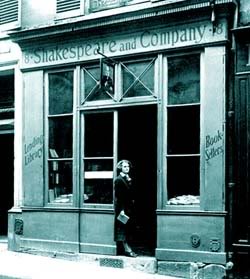
The real Shakespeare and Company on the rue d’Odeon. The bookstore  near Notre Dame that now uses the historic name was previously called Le Mistral. Under that name it  became legendary and one of a kind. I think the name change is unfortunate, not to mention historically confusing.

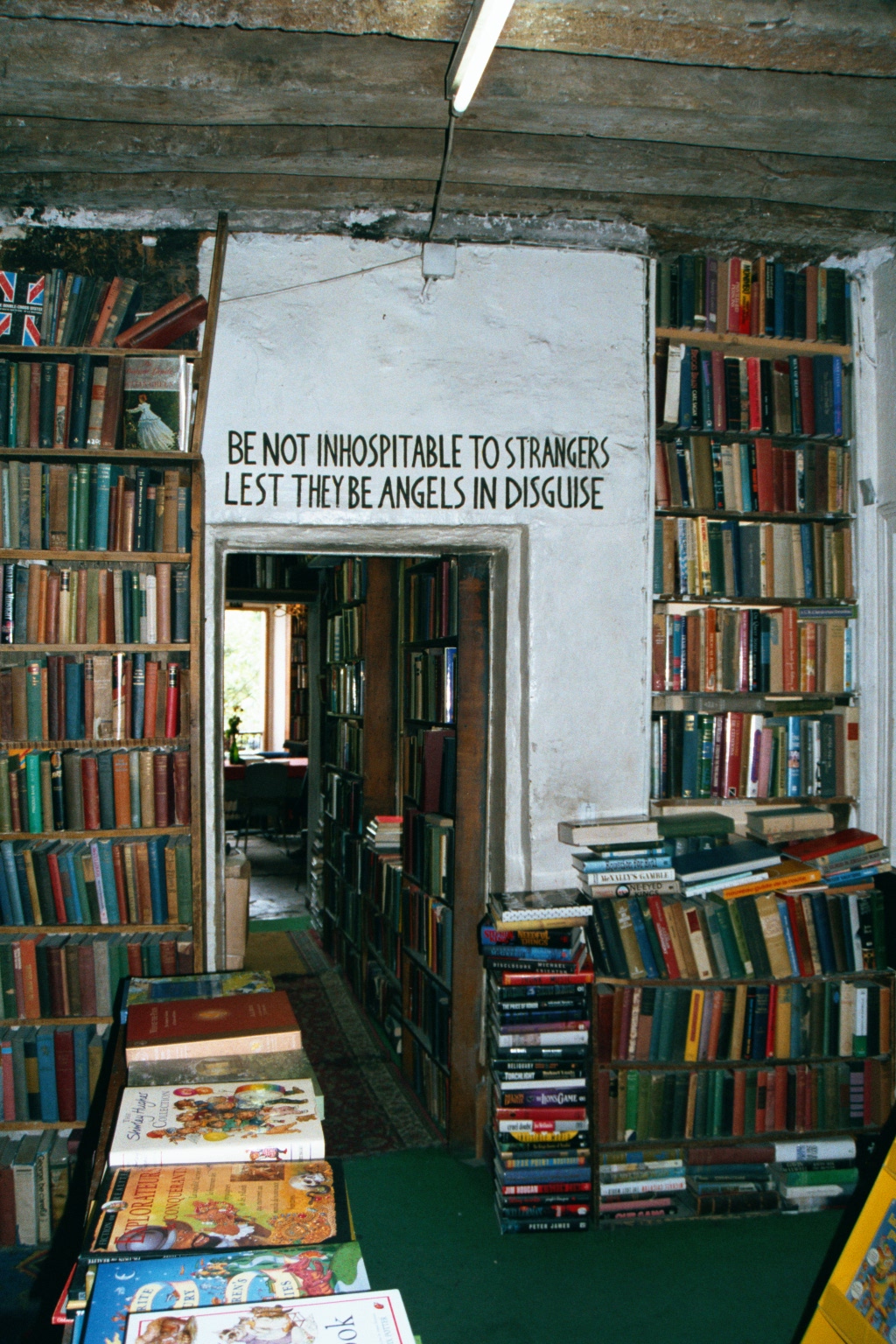
The bookshop originally called Mistral.

CIA Sculpture Code


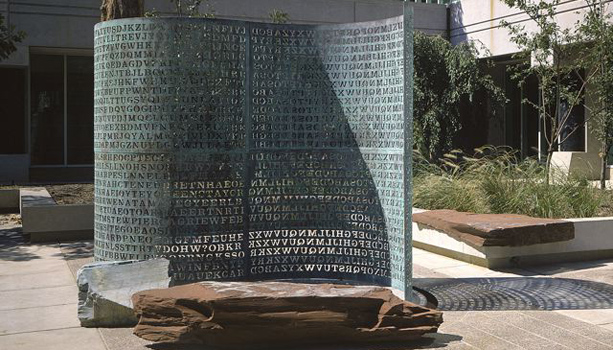
WASHINGTON, D.C.— For the small but maniacally devoted art-and-cryptography community, this was a landmark weekend, as artist Jim Sanborn took to the New York Times to throw a bone to codebreakers looking to unlock the riddle of his 1990 sculpture for the CIA‘s headquarters, “Kryptos.” The outdoor installation, located in the agency’s courtyard, consists mainly of a curving copper plate inscribed with some 1,735 characters, which contain no less than four encrypted messages. The first three were cracked by a CIA physicist in 1998. The mysterious “Panel 4,” designed to be especially difficult to crack, has continued to stymie sleuths. Sanborn, apparently growing weary of fans confronting him with false solutions to the 20-year-old puzzle, has decided to push the process along by offering a hint.

The clue? “BERLIN,” a word that evokes the CIA’s many exploits in the Cold War espionage capital. This, the artist says, is the meaning of the final six characters of the sculpture, which read “NYPVTT.” The revelation might well help fans develop a key to solve the riddle of the other 91 characters.

Contracted by the CIA Fine Art Commission for $250,000, “Kryptos” was part of an expansion into new headquarters, paid for by a federal percent-for-art mandate. The installation includes a petrified tree — meant to represent the “source of materials on which written language has been recorded” — and a bubbling pool of water symbolizing “information being disseminated with the destination being unknown,” according to an official “Kryptos” Web site.

The intrigue of the work, however, has always derived from the secret messages themselves, devised by the artist with the help of CIA cryptographer Edward Scheidt. “Kryptos” has garnered a substantial cult, particularly after author Dan Brown referenced it in his 2009 novel “The Lost Symbol,” suggesting (erroneously) that it might contain “ancient Masonic secrets.”

So far, no new solutions have been posted on the most popular “Kryptos” fan site, maintained byElonka Dunin. For those who think they have cracked the code, Sanborn maintains a special Web portal where people can send their solutions.

Then again, it’s possible that even after the code is cracked, the intrigue will continue. “Once the plate is deciphered I’m not convinced the true meaning will be clear even then,” Sanborn said in a 1991 World News Tonight interview. “There’s another deeper mystery.”

Update: Elonka Dunin writes Artinfo to say: “it’s a significant clue, and we’ve made some interesting discoveries over the last 48 hours. If you’d like to follow along, send an email to kryptos-subscribe@yahoogroups.com.”


Biafra Stamp

My thanks to Nkem Ejiofor for this unexpected and poignant reminder of how important it is to fight against historical amnesia.

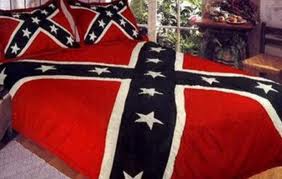
Confederate Quilt

Came across this on eBay. I’ve backed and forthed about whether I want something so disconcerting on my blog. I might or might not leave it here. It simply never occurred to me that such a thing could exist – – matching comforter (!) and pillow shams for the cozy Confederate bedroom. Couples sleep together under this stuff; kids jump on the bed. I guess I’m amazed at what can still amaze me.

Worst President Ever Publishes Clueless Book


From Danny Schecter, The News Dissector. As if Bush ever read a word of Rand – – or much of anything else. As one commentator said about Bush’s book, “I’ll read it when he does.”