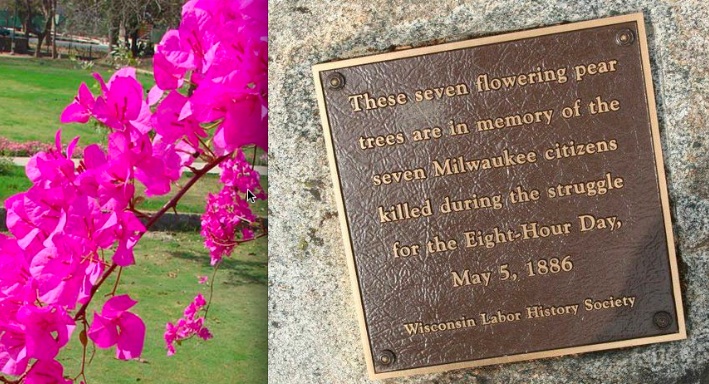
Wisconsin vote, 5 June 2012

. . . And standing there as big as life
And smiling with his eyes
Says Joe, “What they forgot to kill
Went on to organize,
Went on to organize.”

I swear it is hard to understand how so often otherwise reasonable people can be hoodwinked into voting against their own best interests.

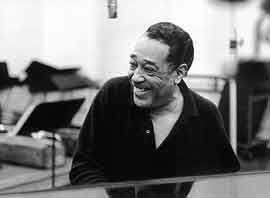
Ellington ‘s Birthday

Anna Walker, late great-aunt, former Broadway hoofer, and later dance teacher (she could do a perfect Rockettes line kick at the age of 80), always celebrated Duke Ellington’s birthday and extraordinary musical legacy.

Today is his birthday, so a toast to Ellington and to Anna with his famous tag line, “I love you; I love you madly.”

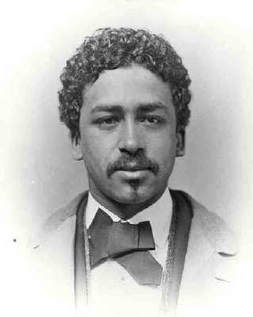
RICHARD GREENER: Remarkable find in Chicago South Side attic – PhotoGallery

Remarkable find in South Side attic – PhotoGallery – Chicago Sun-Times.

San Francisco Symphony


I seldom watch/listen to music on TV, but last evening I happened upon Itzhak Perlman playing the Brahms violin concerto, Michael Tilson Thomas conducting, and I was pulled in. The piece is really a workout, but at the same time, it’s embedded in Perlman’s muscle memory. And what pleasure to enjoy the extended closeups of his animated expressions and occasional glimpses of Tilson Thomas’s minimalist conducting.

Trayvon Trademark

Trayvon Martin’s Mother Files Trademark Papers

The mother of slain Florida teenager Trayvon Martin has filed papers seeking to trademark two slogans based on his name.

Posted: 7:40 AM Mar 27, 2012
Reporter: Associated Press

width:320 and height: 240 and picwidth: 213 and pciheight: 159


I’ve been hearing a lot of holier-than-thou talk about this.  Certainly cringe-inducing at first thought, but probably a poorly handled but pragmatic move to cover just those two phrases. This case will not be resolved soon, and for good or ill, a lot of free-lance unauthorized merchandise is being churned out and sold.

In a sense, Tray has become a public figure in death. Those who see any chance to make a buck on this are hawking everything possible and can incorporate his name however they wish.

There will soon be – – probably already are – – some extremely vulgar and inappropriate shirts, posters, buttons, rap songs, etc. which will include those phrases. And there will be a market/audience for such “souvenirs.” Think what the Tea Party crowd could do, for that matter.

I can imagine family members not wanting to walk down the street a couple of years from now and see torn, filthy, or discarded items with his image and those phrases.

Also would not want to see current rap moguls compose whatever weirdness they want to produce and literally make millions of dollars in the name of free enterprise. The family is aggrieved beyond imagining; should they also be allowed to be exploited because taking action to curb such use of their son’s name is “indelicate”?

Painful, no matter what they do.

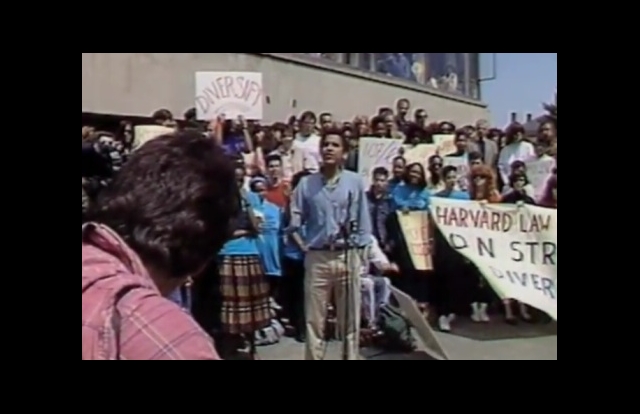
Obama & Derrick Bell

So Breitbart’s info that would end Obama’s career was that in 1991 Obama spoke well of Derrick Bell? That’s right up there with having put in a good word for the Dalai Lama.

I knew Derrick Bell and his family, and helped organize the memorial service at The African Meeting House for his first wife, Jewel, who died at far too early an age.

If anyone is in need of heroes of integrity, concern for individuals and for community, delight in life, and profound and lasting intellectual work, read up on them both.

Speaking ill of the dead Breitbart is one thing; speaking the simple truth is another: he was about to attempt another Shirley Sherrod, only worse as it was against a man no longer alive to speak for himself. I guarantee there would have been a significant outcry if Breitbart had lived to try something both so vile and so just plain stupid.

There was no “hidden” video. It was easily available and utterly innocuous.

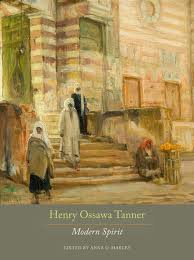
To: New York Times; Re: Henry O. Tanner Exhibition

To The Editor, Re: “An African-American Painter Who Tried to Transcend Race” Feb. 9, 2012)

Ken Johnson’s review of the major Henry O. Tanner retrospective at the Pennsylvania Academy of the Fine Arts is flawed by errors, misinformation, and passages of snide condescension.

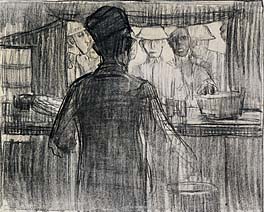
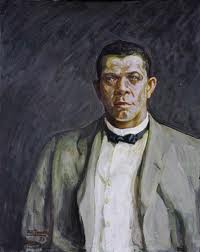
Johnson writes that after 1894 Tanner made no paintings of African- American life. In fact, his formal portrait of Booker T. Washington was completed in 1917. He also made drawings of black servicemen during World War I.

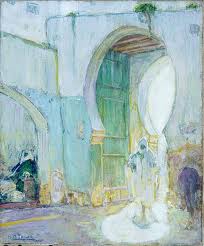
Beyond painting blacks in America, Tanner spent considerable time in North Africa and Egypt producing vivid and complex paintings of architecture, street scenes, and the people of dark and light hue he saw there.

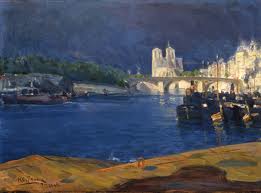
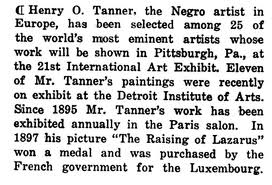
France has long recognized Tanner’s genius with awards and honors; his paintings are in collections at the Louvre, the Musee d’Orsay, and elsewhere.  Along with the religious scenes Mr. Johnson discusses, Tanner painted life in the French countryside and in seaside villages. He produced dozens of gorgeous paintings of Paris that study the play and power of light in scenes observed from dawn to midnight.

Johnson makes much of Tanner’s wish to escape American racism in moving to France, and of the way European critics addressed the work while their American counterparts emphasized the artist’s race. His superficial and dismissive review inclines Mr. Johnson to that outdated American camp. 

I hope the public will take the opportunity to enjoy and judge for itself this once-in-a-lifetime exhibition. So far, the show has attracted a record number of visitors.

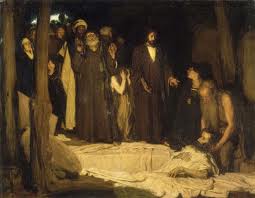
Lazarus

Annunciation

George Washington and the “Main Event”

By Louise Mirrer, New-York Historical Society

“Slavery,” historian James Oliver Horton wrote in 2006, “was not a sideshow in American history. It was the main event.” So why has a work by the African-American artist Fred Wilson — an installation piece that riffs on the topic by assembling authentic slave shackles, slave chains and Revolutionary-era icons — been such a sore point with critics?

Conceived especially for the New-York Historical Society, Wilson’s Liberty/Liberté was our unquestioned choice to be the first thing that visitors would see when they came into our renovated building. Our ground floor would now offer the first overview we have ever presented, in more than 200 years in operation, of the themes and collections of our Museum. Our building would now reveal these new galleries immediately to visitors, thanks to a glass-walled entrance lobby. And facing the visitors through the glass wall, as soon as they came in the door, would be this large, complex installation by Wilson, made entirely with objects from New-York Historical and from its resident Gilder Lehrman Collection.

2012-02-06-85413d_SmithGalleryInstall_img3.jpg

What happened when we threw open the doors last November? Critics universally praised our ground-floor galleries — and complained about Wilson’s installation. Obviously, we had struck a raw nerve. To explain how, and why, let me tell you a little about the artist and what he has done.

Born in 1954, Fred Wilson is one of the best-known American artists of his generation. For the past twenty years, he has created engaging, thought-provoking artworks with the lightest touch imaginable by ingeniously reshuffling the objects he finds in the permanent collections of museums. He has been recognized with a MacArthur Foundation “genius grant” and in 2003 he represented the United States as our nation’s official artist at the Venice Biennale.

For New-York Historical, Wilson arranged his chosen objects on and around a large marble stand made with pedestals of varying heights. Among the pieces that Wilson assembled for Liberty/Liberté were two sculptures of George Washington (one showing him in the toga of an ancient Roman republican, the other in the garb of a Virginia gentleman farmer); a cigar-store figurine of an African-American man holding a red French liberty cap; a bust of Napoleon Bonaparte; a miniature portrait of Haitian liberator Toussaint L’Ouverture; a wrought-iron balustrade from Federal Hall in New York, where Washington was sworn in as the first President; chains, shackles and slave badges (the metal tags that were used to label enslaved African Americans with the crafts they practiced); and a tag bearing Sojourner Truth’s famous question, “Ain’t I a woman?”

What did our critics make of this assemblage? They voiced two main complaints: Wilson’s piece had no readily discernible meaning, and its meaning was far too obvious.

Liberty/Liberté is “enigmatic,” one critic wrote. “What is it about? Slavery? Tyranny? The Constitution? No clear answer is given to the puzzled onlooker.” Another critic thought he knew exactly what the piece meant — and didn’t like it. “In recent exhibitions,” he wrote, “the society has explored some troubling aspects of New York’s past, but the presentations were nuanced and enlarging. Here, though, we see only a placard. We want to think highly of our once-worshiped gods? Hypocrites, slave holders, oppressors!”

Because Wilson’s installations are in effect high-art Rorschach blots, these judgments tell us more, perhaps, about how touchy the topic of American slavery still is than about Liberty/Liberté. Could it possibly be that Wilson had something in mind other than the simple-minded intention to debunk and condemn? Could it also be possible to connect slavery, tyranny, and constitutional government — and that Wilson is doing just this in his work?

In fact, though, Wilson in Liberty/Liberté is doing nothing more than New-York Historical’s curators have done elsewhere throughout the galleries, or that researchers do every day in New-York Historical’s Library. Wilson has reached into the trove of evidence left to us by past centuries. He has selected; he has juxtaposed; and in so doing, he has given us one possible interpretation of what happened in history. Where Wilson differs from the others is that he leaves much of this interpretation to the viewers. In essence, we become the curators and researchers.

That’s why we believe Liberty/Liberté is really an ideal introduction to New-York Historical’s galleries. It has the potential to get everyone thinking like an historian. And that’s also why the criticism of Wilson’s installation is so interesting. When it comes to the “main event” in American history, our nerves are still very raw.